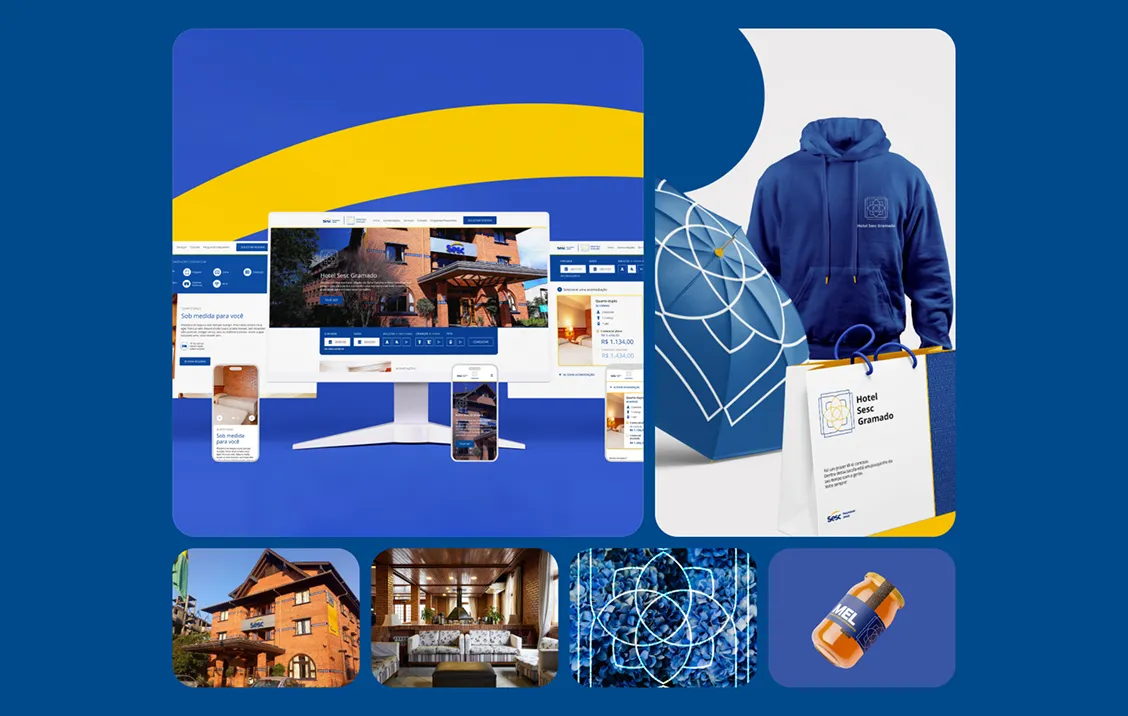
Sesc Hotels Network
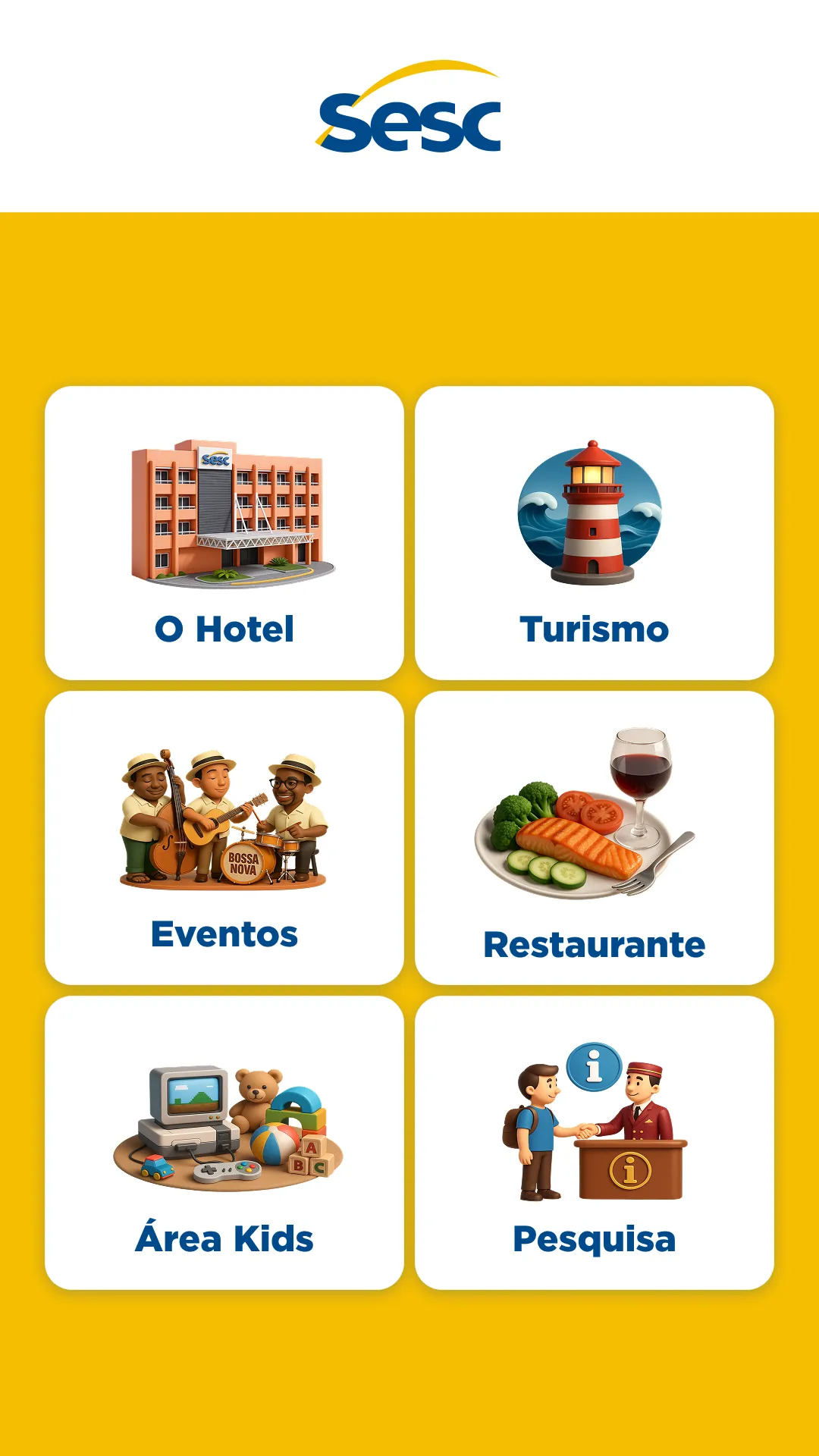
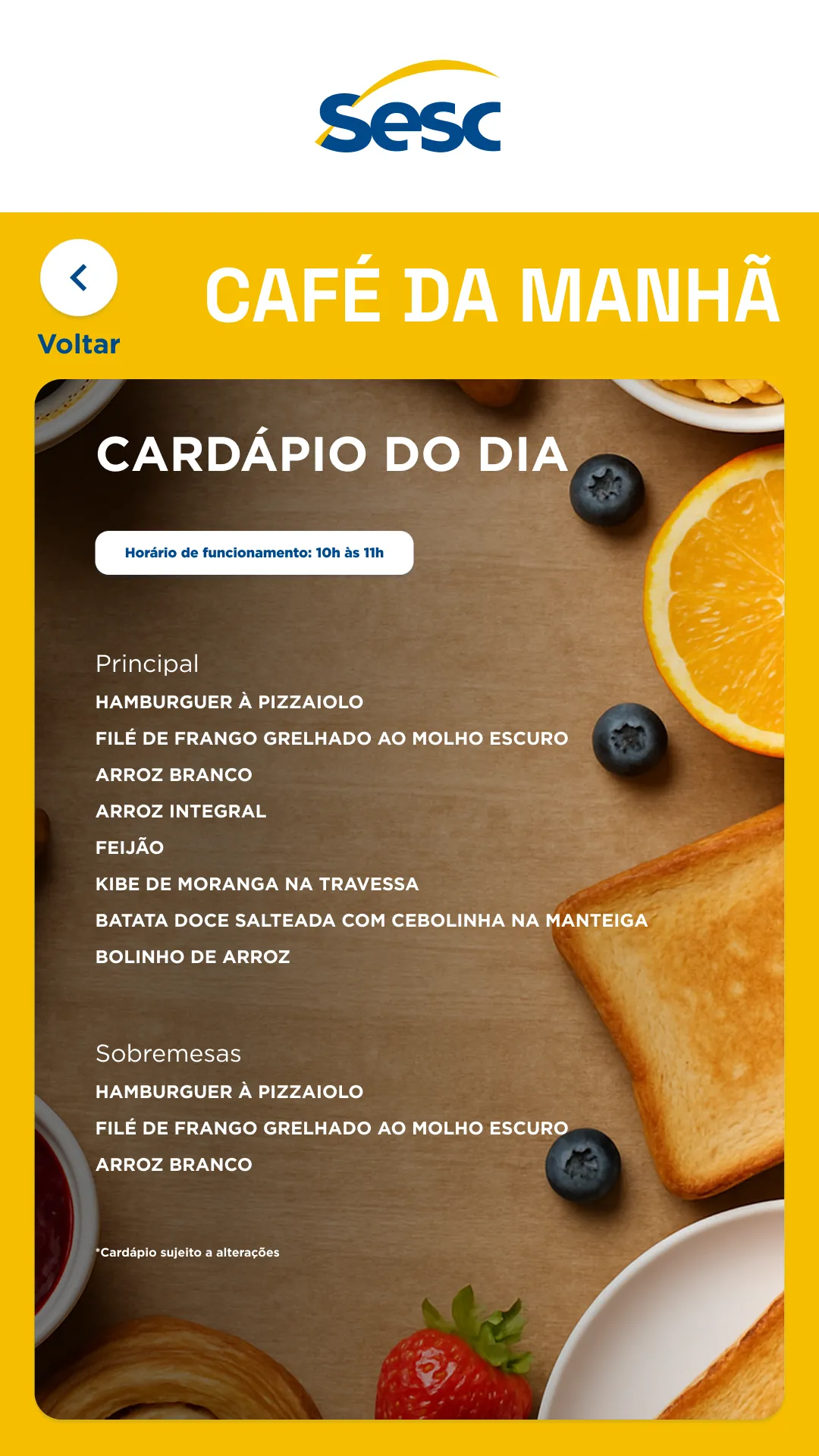
A digital home for a hotel network — from booking to on-site interactive totems guiding guests to food, events, and destinations.

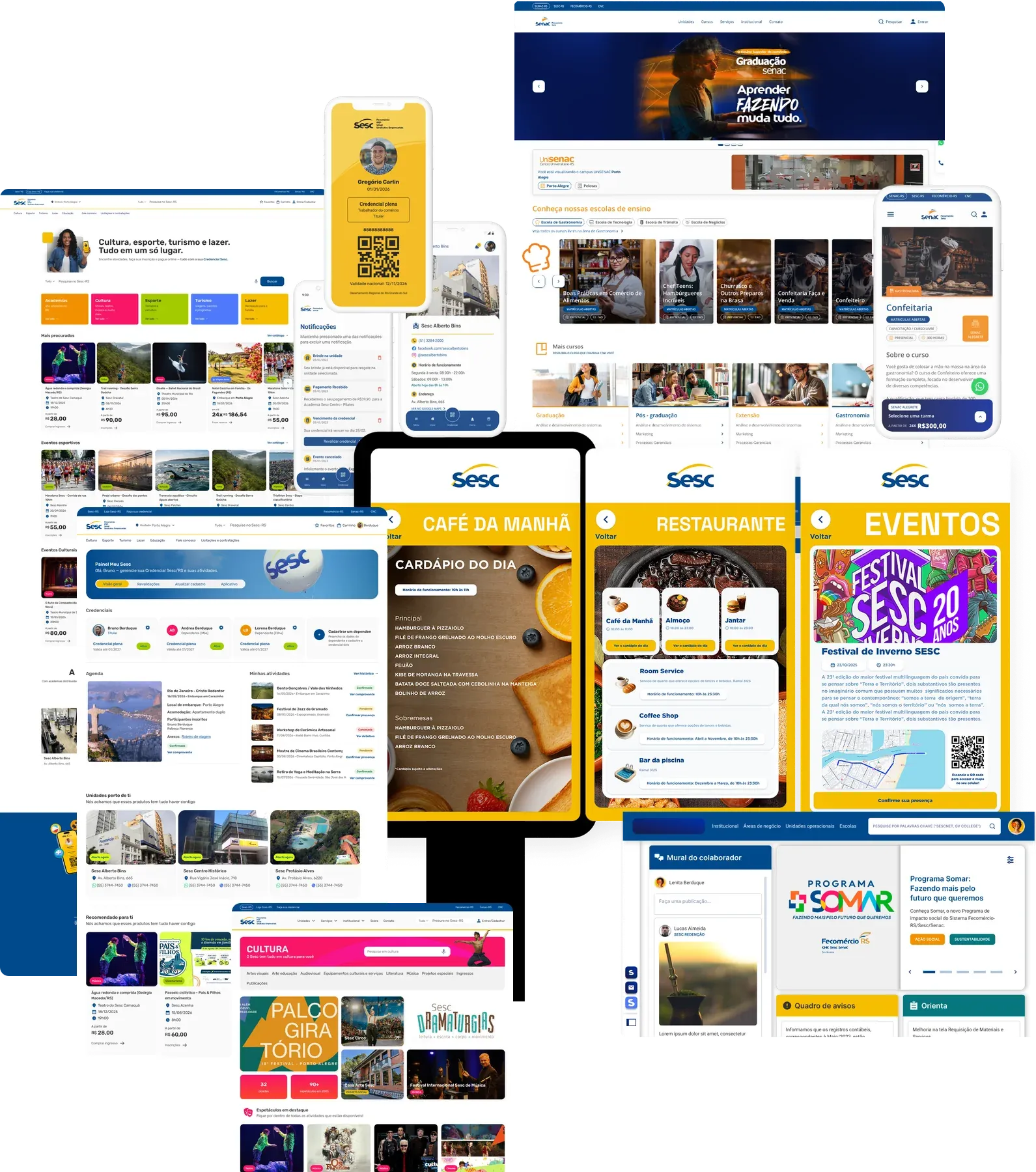
Building one design system for a federation and its institutions — across four companies, more than ten products, and four platforms.

Summary
In 2020 I was tasked with the challenge and responsibility of refining the digital products and experiences of Sesc-RS.
I developed the first UX practices within the company, working alongside a development team and stakeholders from 8 different service areas. Over the next 6 years we matured our projects into a cohesive Design System called Horizonte.
177 components
4 companies
10+ products
4 platform types
 Web
Web  App
App  Kiosk
Kiosk  Intranet




Website
Each service axis serves its own target audience, even though they all fall under the same institutional umbrella. Optimizing each service area involved extensive listening sessions with stakeholders from each area, learning about distinct rules, systems, and operations, and therefore, distinct user pain points and needs.
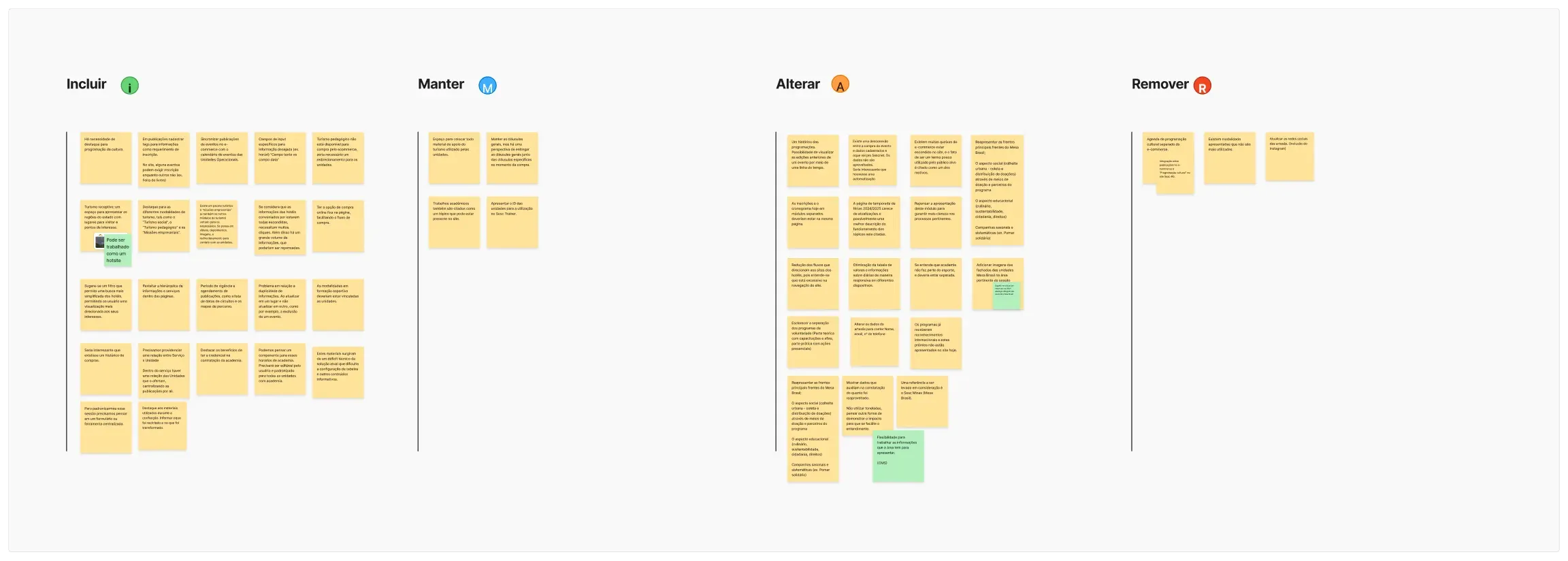
Teams wanted each location to publish more on its own, and in the same conversation worried about losing consistency and keeping information current.
Where the site couldn’t hold the content, people worked around it: timetables posted as images, registrations run through Google and Microsoft Forms, event times typed as free text.
The same event was entered separately in the agenda, Loja Sesc-RS and SescNET, so a change in one place — even a deletion — didn’t reach the others.
Together with the leads from each area, we turned the findings into seven objectives. The sections below take on four of them.
Connect the events agenda, Loja Sesc-RS and SescNET so each event is entered once, with publishing windows and scheduling built in.
Rebuild navigation and page hierarchy so each service area can present its programs its own way inside a shared structure, and keep that information current.
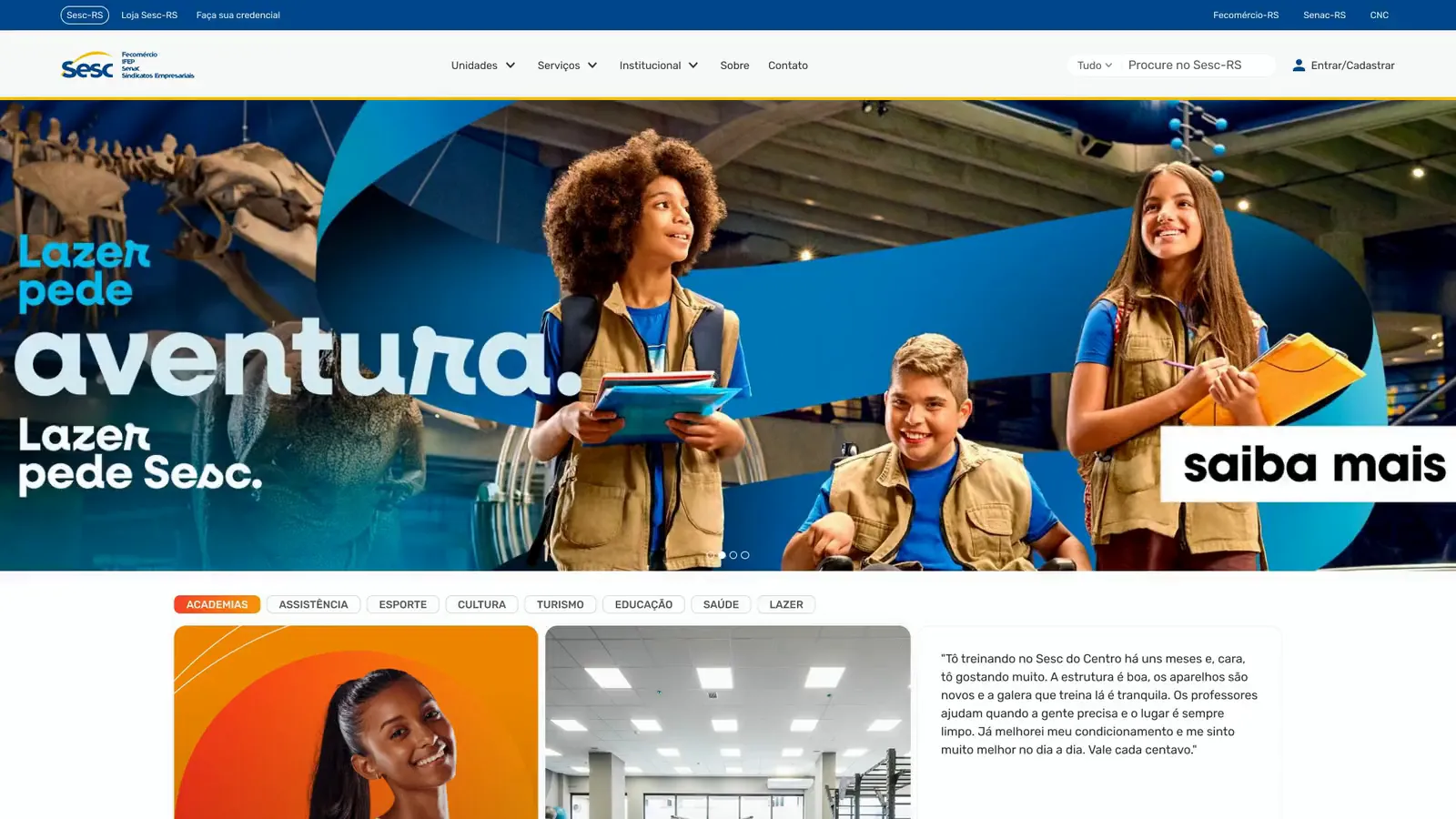
Put Loja Sesc-RS within reach of every program page, with a clear path from reading about a service to buying it.
Move credential sign-up online and cut its requirements, starting with the Credencial Atividades for the general public.
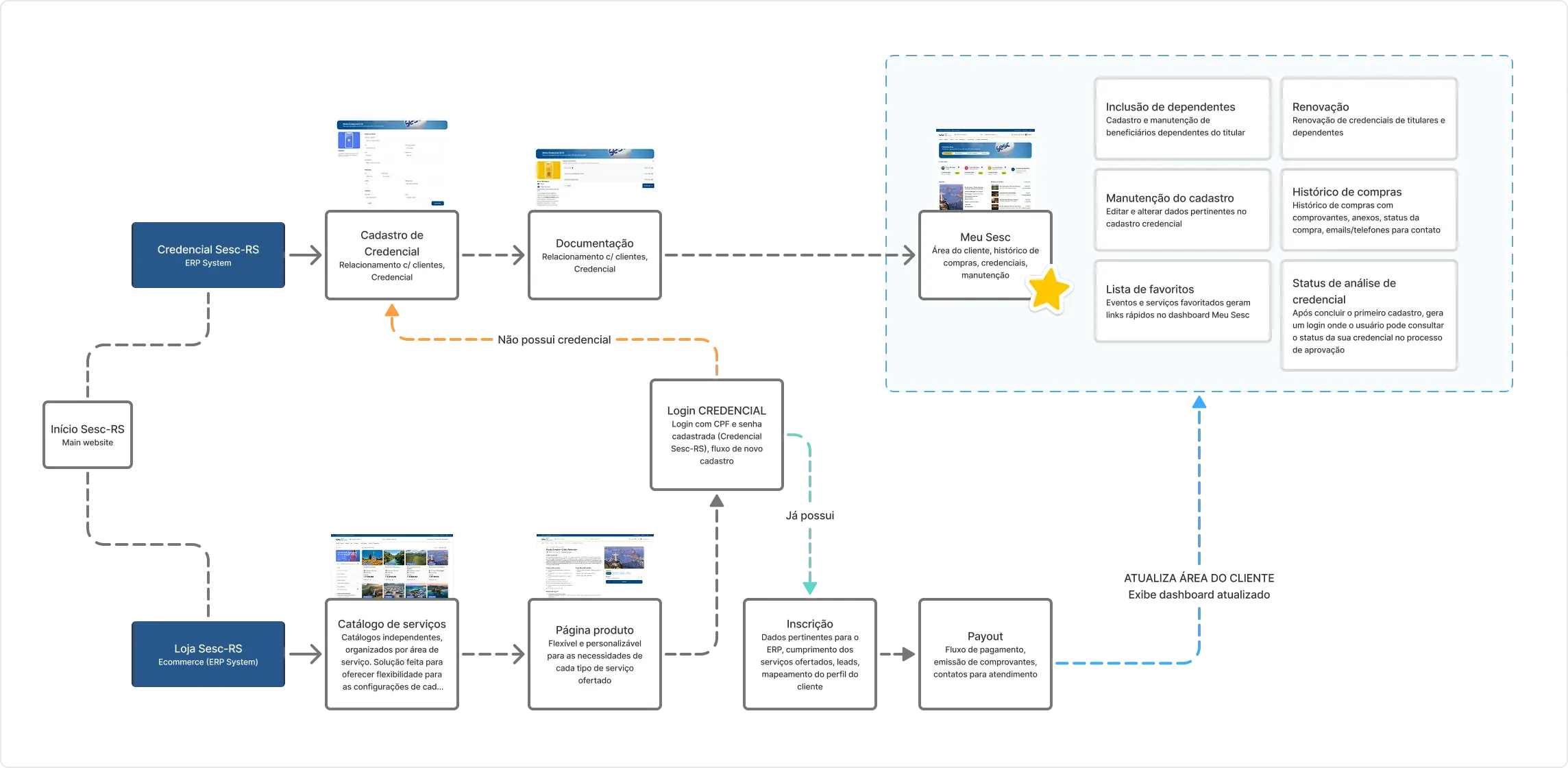
One login across Sesc’s digital products, and one place for a customer’s details, purchases and history.
Retire the old ERP screens still built into the site, and make payments and receipts dependable.
Measure how people use the site and the store, starting with Hotjar, so later decisions rest on behavior rather than opinion.
At its core Horizonte needed to communicate the values of the federation and its entities, 80 years of tradition and millions of clients and stories. In order to retain the institutional values in our design, we defined our guiding stars:

We focus on nurturing people. Horizonte is human-first, guiding our design. It’s not techy but human, feeling familiar, trustworthy, and welcoming.

We serve millions monthly, offering services in health, sports, theater, music, education, social services, and more. The design system had to be accessible to all.

Horizonte simplified core user flows—creating credentials, purchasing services remotely, and checking purchase history—making previously difficult digital products intuitive.

Horizonte spans web apps, internal systems, and digital totems across 60+ locations. With diverse user profiles and preferences, we built a flexible, adaptable system.
Button component
We utilized the supporting colors of our brand manual to color-code the main branches of products and services, all while making sure each branch carried its own personality without straying too far from home.

Esporte
#A3CB00

Academias
#F29100

Cultura
#F91567

Turismo
#4F7AFB

Lazer
#F6BE00

Educação
#4EB0FA

Assistência
#FC4629

Saúde
#009BA9
Text color adapts for contrast and legibility
Objective 02: One structure every area can fill
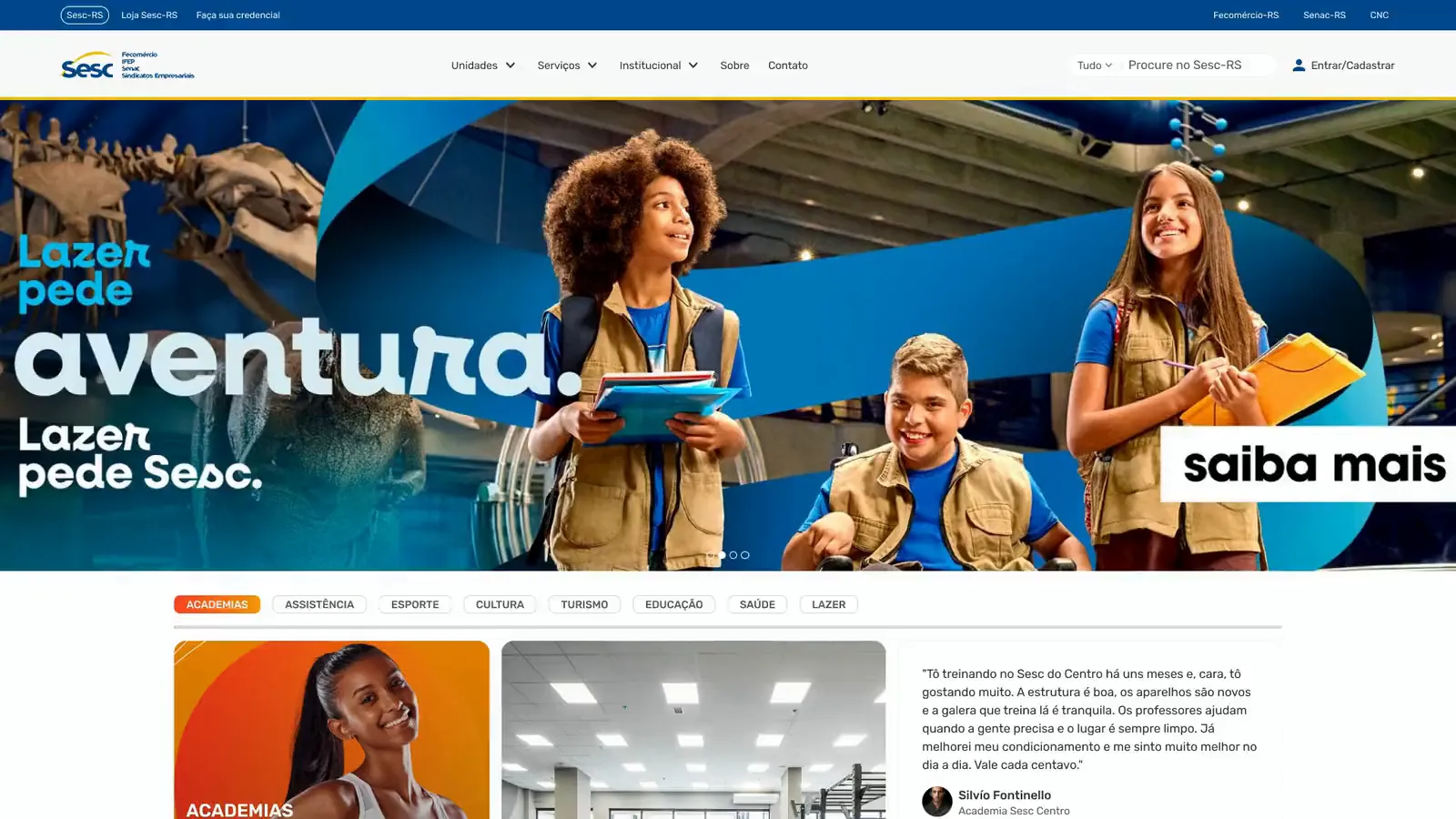
Sesc operates in 8 different sectors, each with its own management strategies and distinct operations, servicing over sixty locations across the state.
The diversity of approaches and services meant stakeholders competing with other administrations for premium space on the site.
One flexible grid with configurable slots. Each area chooses what to show and in what order. Same structure, infinite variation, all utilizing components from the very same design system.
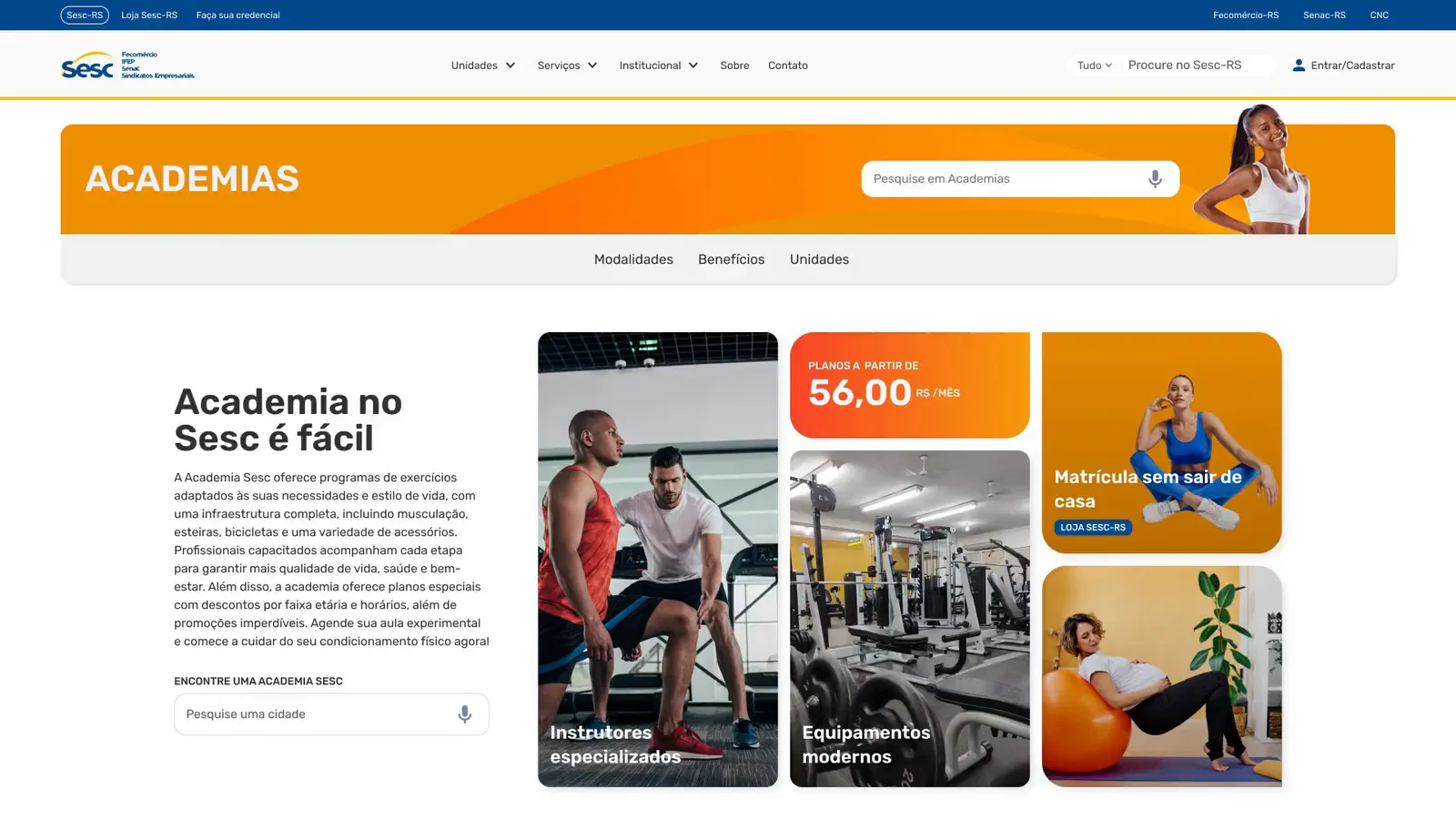
Objective 03: A store people can find
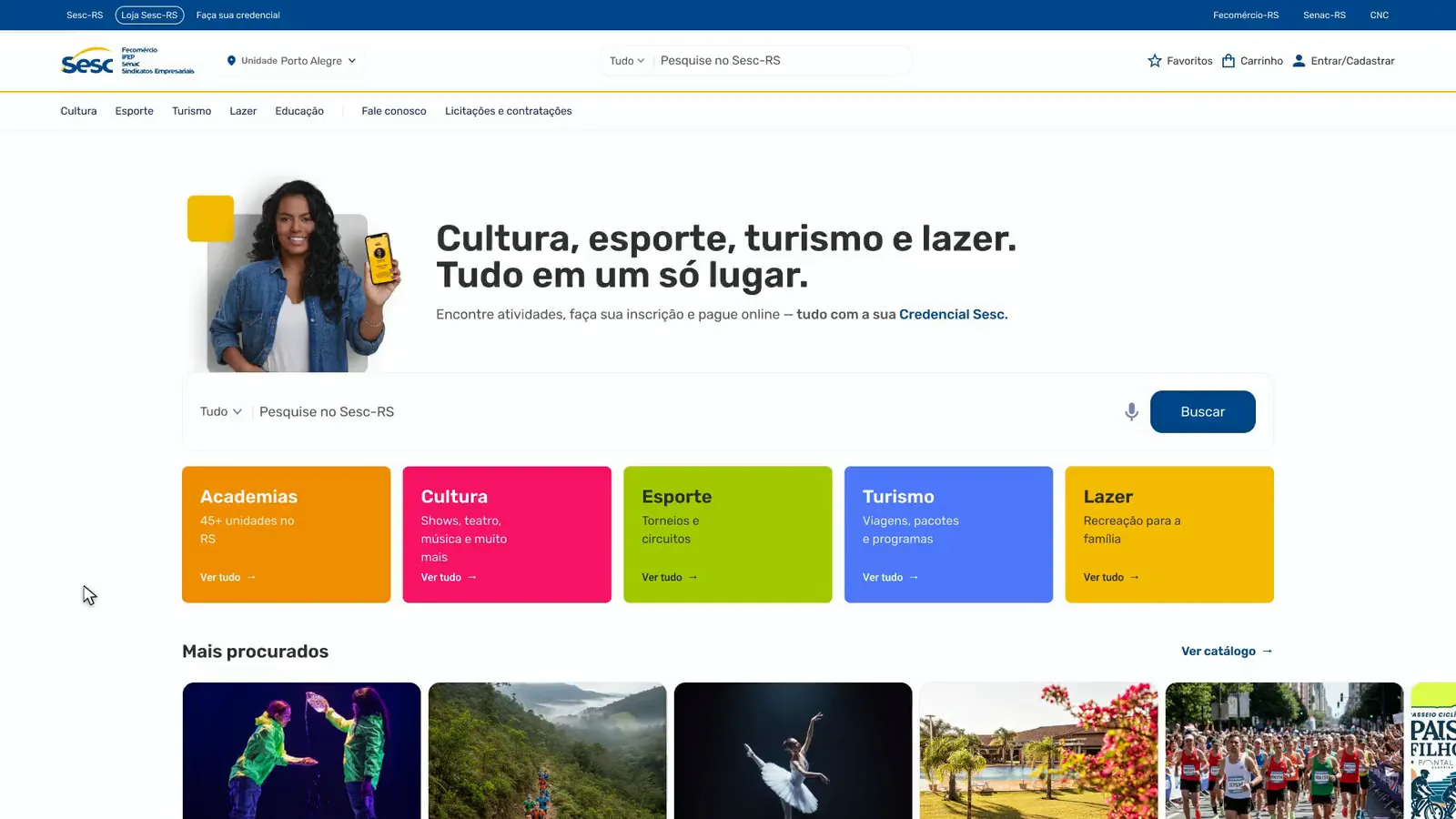
Objective 04: A credential you can get online
A Sesc credential can extend to the holder’s family, and who counts as a dependent depends on age, relationship and documents. In person, staff worked through those rules case by case. Online, the flow had to do that work itself, and ask adults whether they agreed to be added at all.
The proposed flow splits by age. For a minor, the holder fills in their details and both credentials go to review together. An adult gets an invitation and has 30 days to accept it and create their own login. If they decline, the credential is refused; if they don’t answer, it’s disabled until the holder sends a new invite from Meu Sesc.
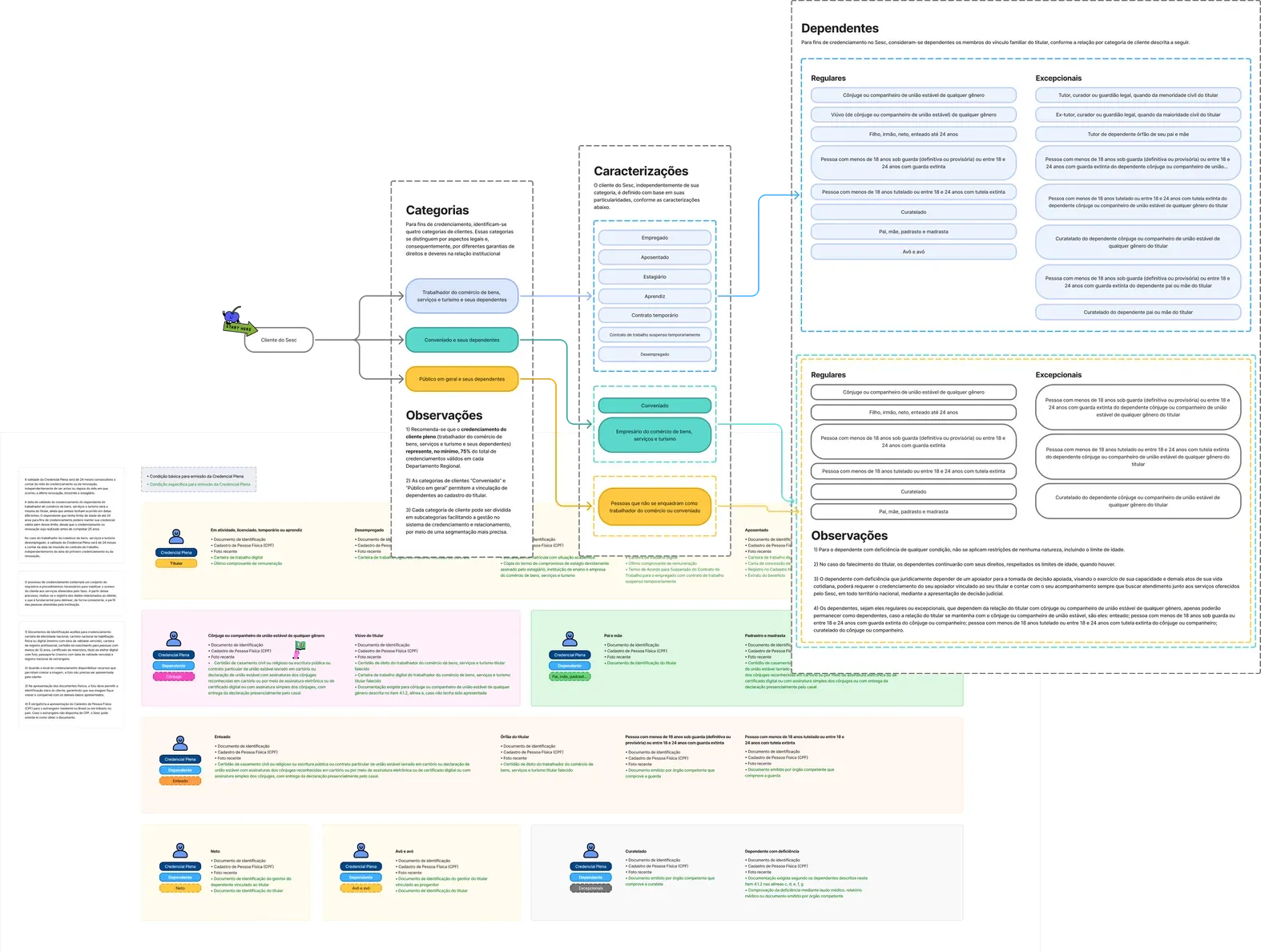
Insights
Research notes and a quick user-flow scenario for the credential sign-up process were really helpful in communicating the complicated rules for each scenario in the context of a big multi-disciplinary group.
We used FigJam boards as an efficient shared space for registering enquiries and insights as they came during meetings and during the development of the new digital credential sign-up process.
Proposed flow: adding a dependent
Every outcome shows up in the holder’s Meu Sesc dashboard.
 Under 18
The holder adds the dependent’s details and documents

Both credentials go to review together
 18 or over
An invite goes out by email, WhatsApp or link
The dependent replies
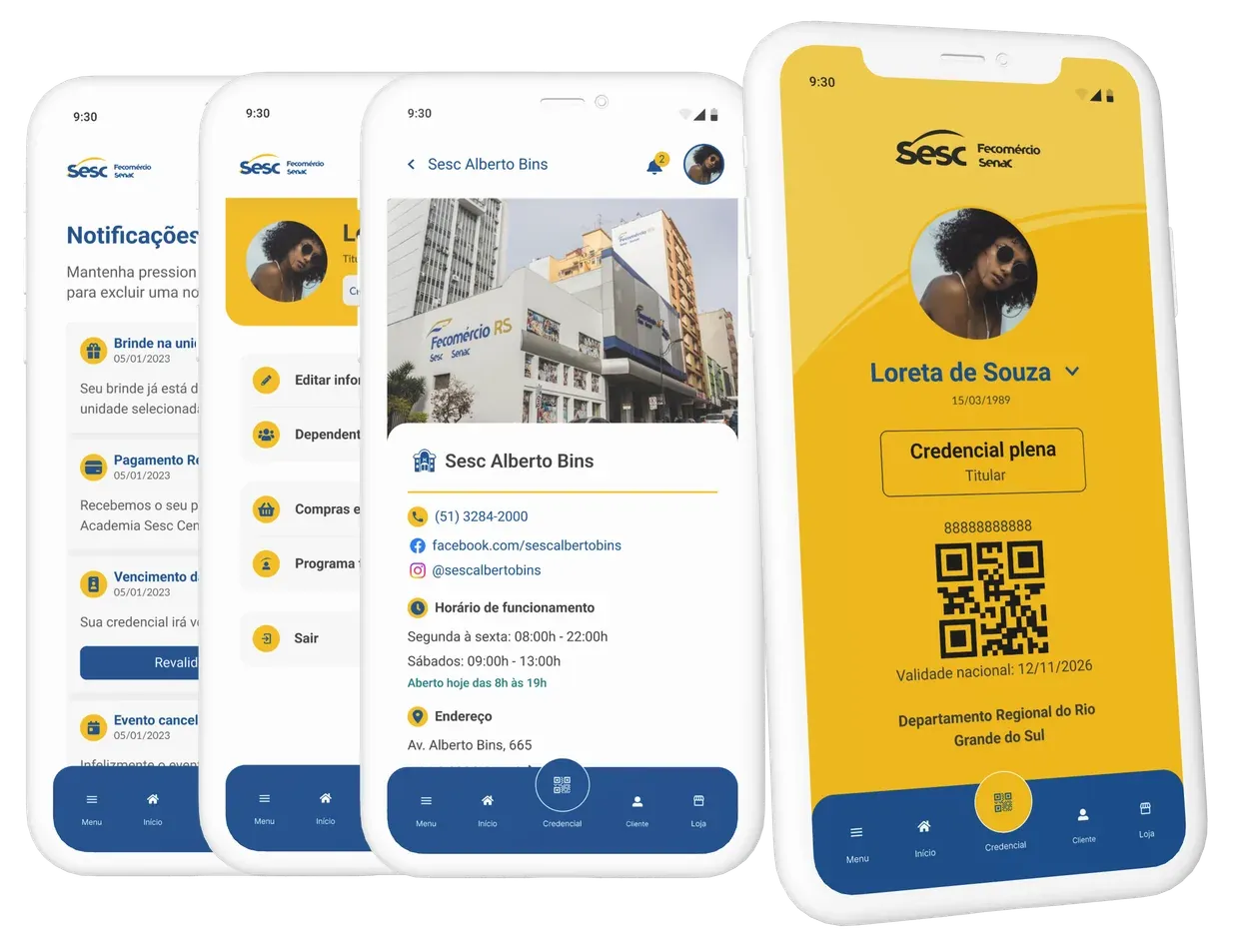
Long before I became a designer, I ran the entire physical credential operation myself, sourcing materials, printing thousands of cards a day across two aging printers, packaging and routing them to fifty locations statewide, tracking errors, managing inventory, and working directly with clients and internal teams to fix what went wrong. That hands-on grind gave me a real understanding of the process this digital system needed to replace, and what it had to get right.
Note: This app version was fully designed but not yet shipped by the company — the live version does not reflect this level of polish.
Objective 05: One account, one customer area
The main conversion flows converge toward the client area, which becomes a “hub” for the Sesc-RS customer. This design decision addresses several pain points identified during the product research phases, carried out together with the entire management of the service areas and front-line operations across more than 60 Sesc-RS locations.
More solutions
Outcomes
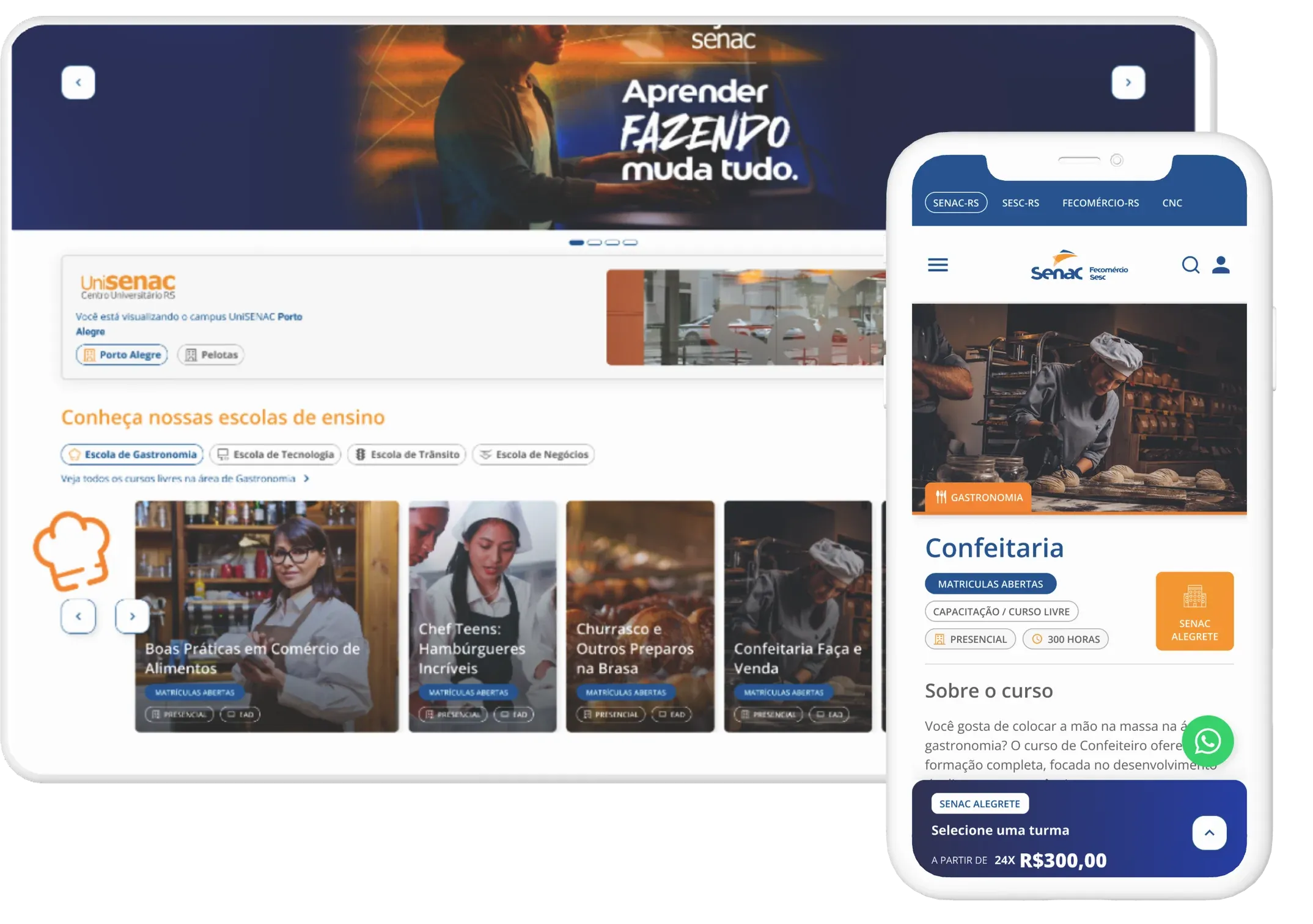
These figures come from the Senac-RS website alone, not from every product built on the system.
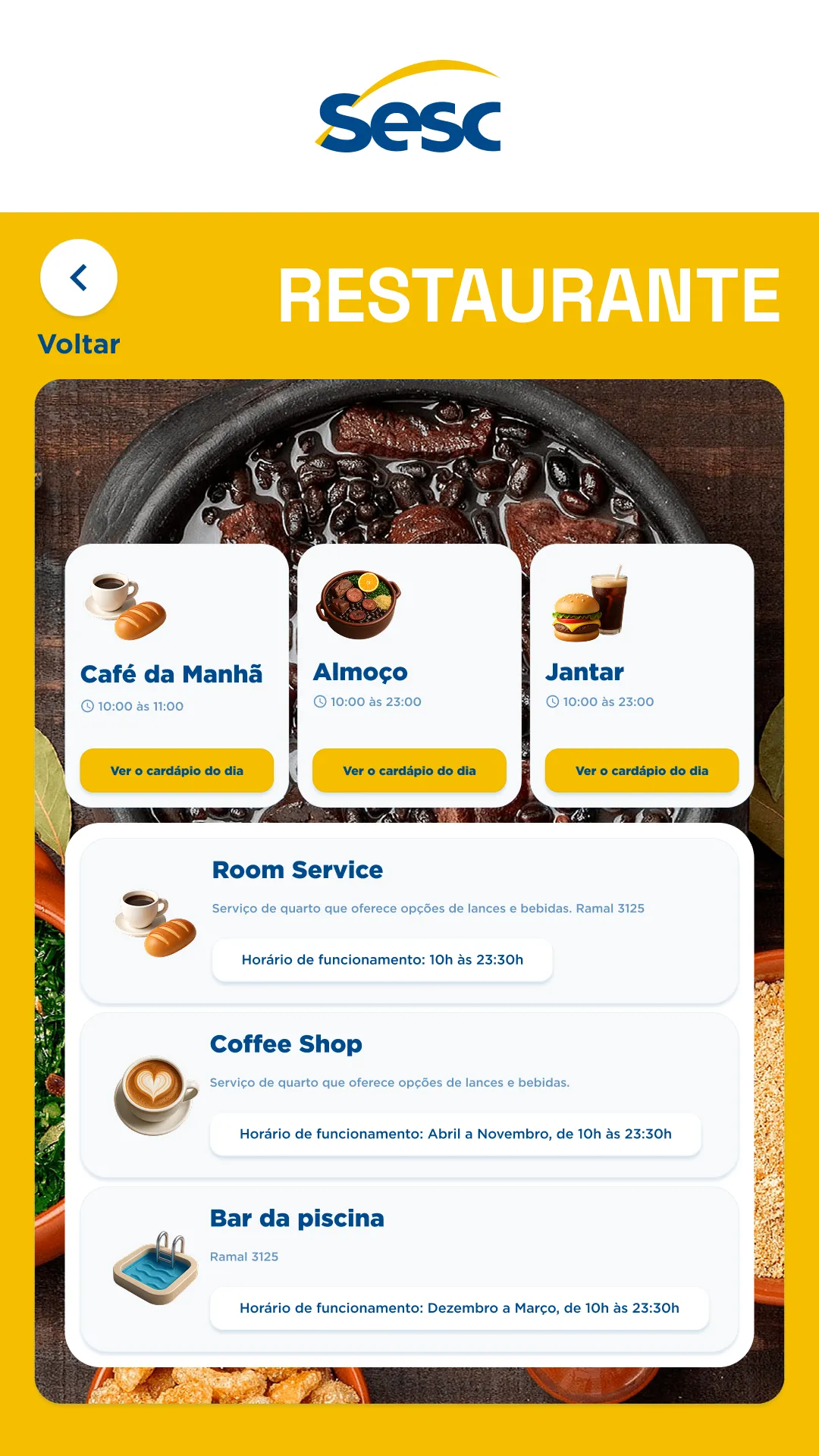
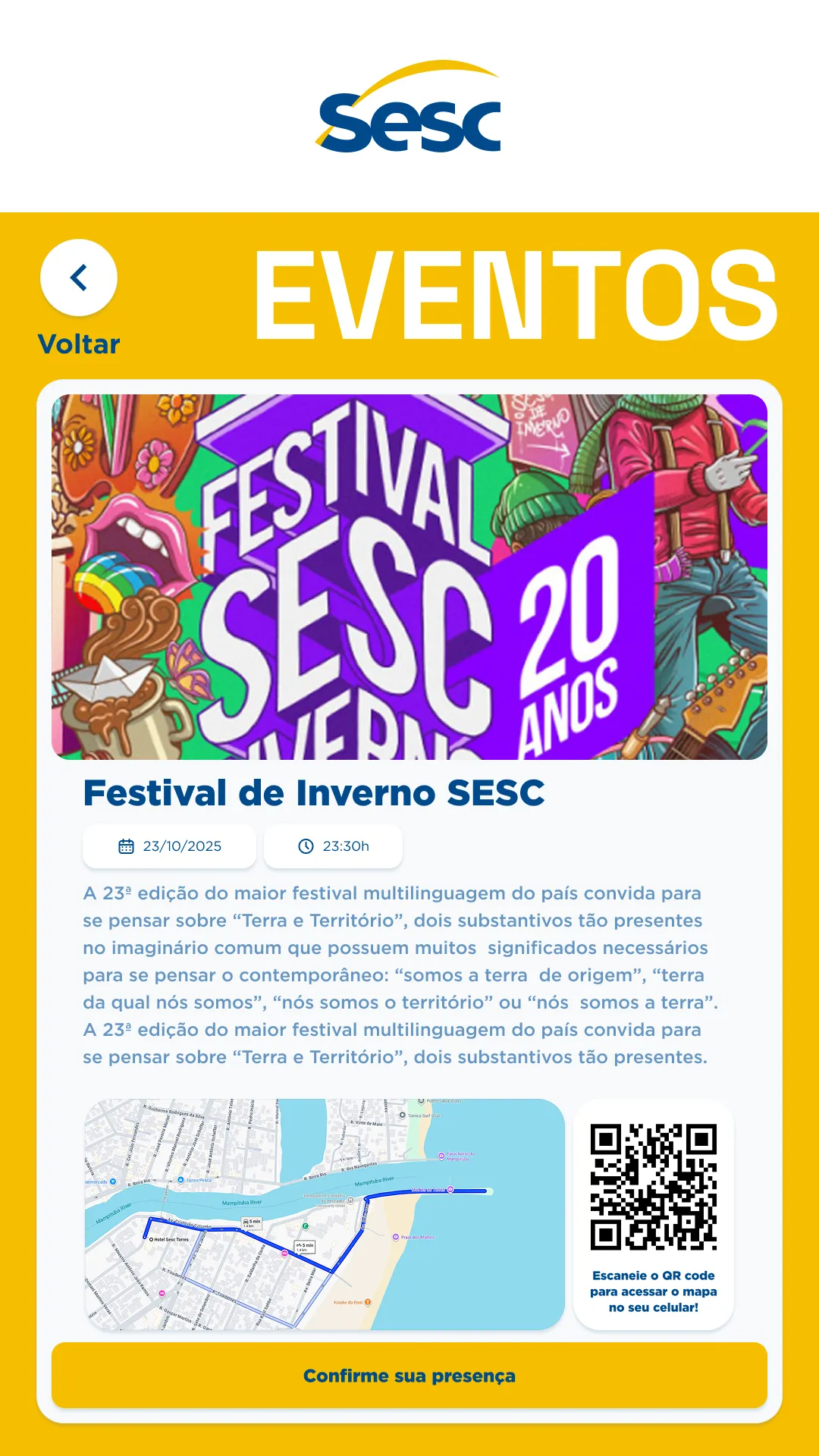
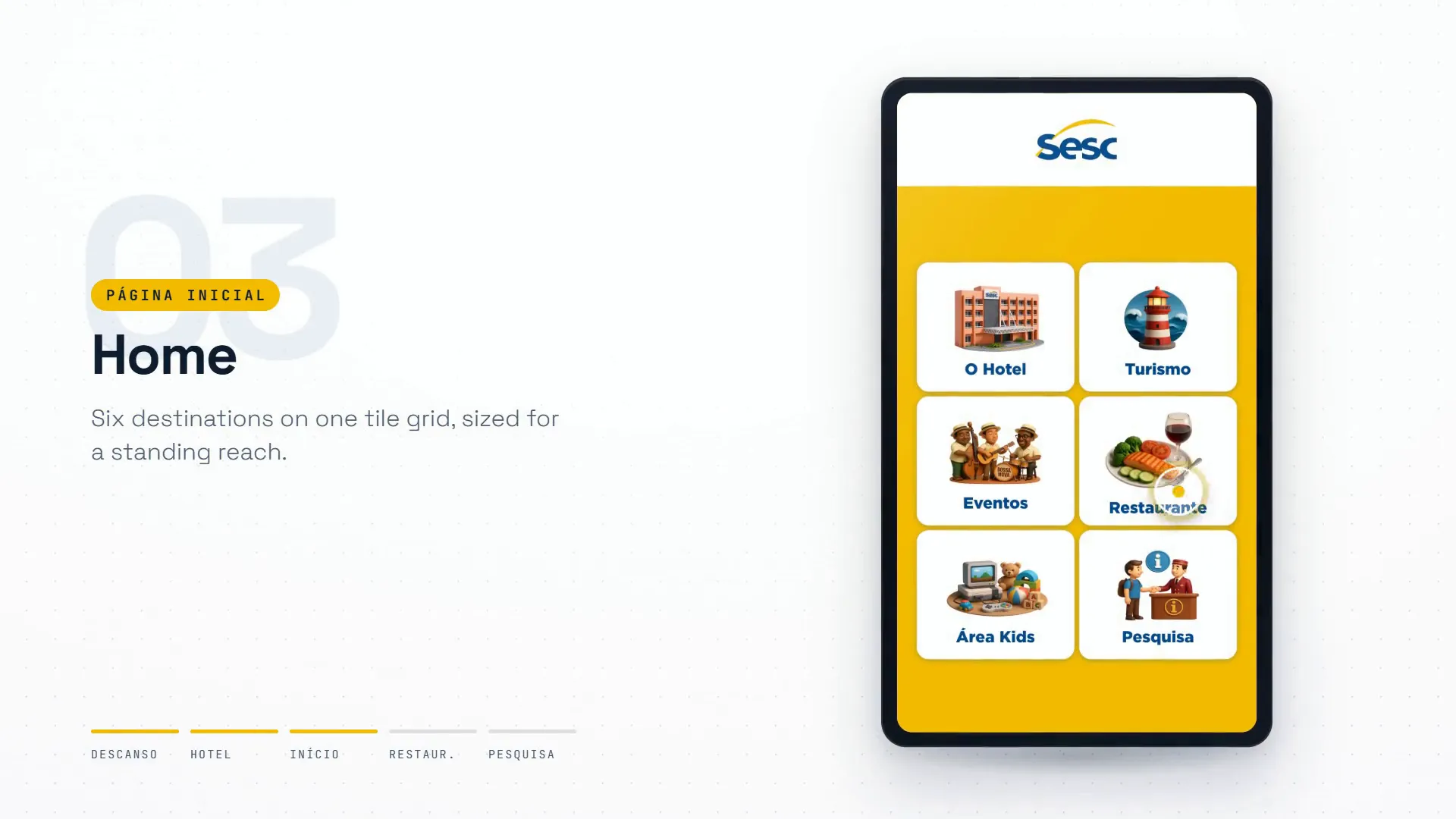
A digital home for a hotel network — from booking to on-site interactive totems guiding guests to food, events, and destinations.

Branding for a fashion consultant whose whole service is helping women be unique.